Bottom Line Up Front: Microplastics are bad. You probably should know more and definitely should do more to address it. Let me tell you why and how.
I began hearing some rumblings about microplastics when the BPA crisis happened in the early 2010s. Everyone got spun up about BPA. We eliminated all containers and water bottles with BPA and stopped talking about it. Then some years later, more emerged on how we are actually ingesting a lot of plastic. It was disrupting our endocrine system, disrupting a range of bodily systems, accumulating in the brain, and causing DNA damage amongst other things. I didn’t really take it too seriously until the volume and frequency of information I was getting hit a tipping point. I had made some minor changes in my life as a result of this. Within the past few years, however, I have made more significant adjustments to achieve what I believe is a major reduction in microplastics.
Here is a short summary of what they are, what they are bad, my list of action items to at least eliminate the most egregious sources from your life, and more resources if you want to dig deeper.
Background on Microplastics
Microplastics are defined as small plastic particles less than 5 millimeters in size, often insoluble in water and non-degradable, making them persistent environmental pollutants. They originate from two main categories: primary microplastics, which are intentionally manufactured for use in products like cosmetics, cleaning agents, and industrial materials, and secondary microplastics, formed through the breakdown of larger plastic items via processes such as UV radiation, mechanical abrasion, and biodegradation. The history of plastics dates back to the late 19th century with early synthetic polymers like Bakelite, but production exploded after World War II, leading to widespread use in everyday items. Today, global plastic production exceeds 430 million tonnes annually, with much of it becoming short-lived waste that contributes to microplastic pollution in oceans, rivers, soil, air, and even remote areas like the Arctic and Mount Everest. Key entry points into the environment include mismanaged waste, wastewater treatment plants (which often fail to filter them fully), urban runoff, atmospheric deposition, and industrial spills. This ubiquity has turned microplastics into a global issue, affecting ecosystems through bioaccumulation and the adsorption of harmful chemicals like heavy metals and persistent organic pollutants.
What Experts Believe
Experts increasingly view microplastics as a significant threat to both environmental and human health, though research is ongoing and some gaps remain in understanding long-term effects. Many scientists associate exposure with risks such as cardiovascular disease, reduced fertility, hormone disruption, oxidative stress, inflammation, and potential links to cancers like lung and colon varieties. Animal and cell studies show microplastics can cause DNA damage, gene activity changes, immune dysregulation, and microbiota alterations, with modeling suggesting wide-scale environmental harm possible within 70-100 years. Observational human studies link them to higher risks of heart attack, stroke, dementia, and early death, with particles found in organs like the brain, heart, lungs, and placenta. A review by NRDC scientists concludes that exposure is suspected to harm reproductive, digestive, and respiratory health. However, the U.S. FDA states that current levels detected in foods do not demonstrate a clear risk to human health, emphasizing the need for more data on toxicity variations by particle type, size, and concentration. Overall, experts like those from UNEP and Harvard call for accelerated research and policy actions to limit spread, noting benefits to ecosystems and human well-being from reducing prevalence. Plastic production is expected to triple in the next 40 years, amplifying these concerns.
Examples of Places Where Microplastics Are Consumed in Everyday Life
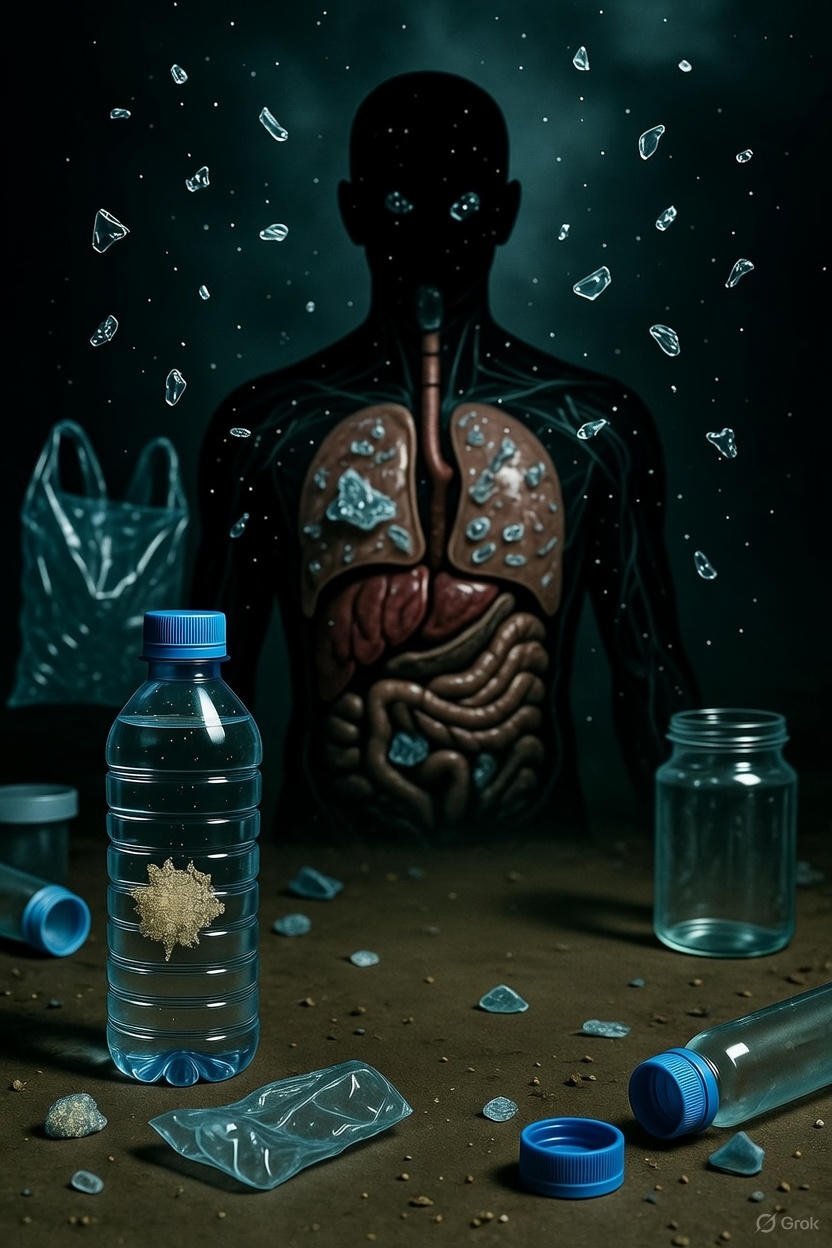
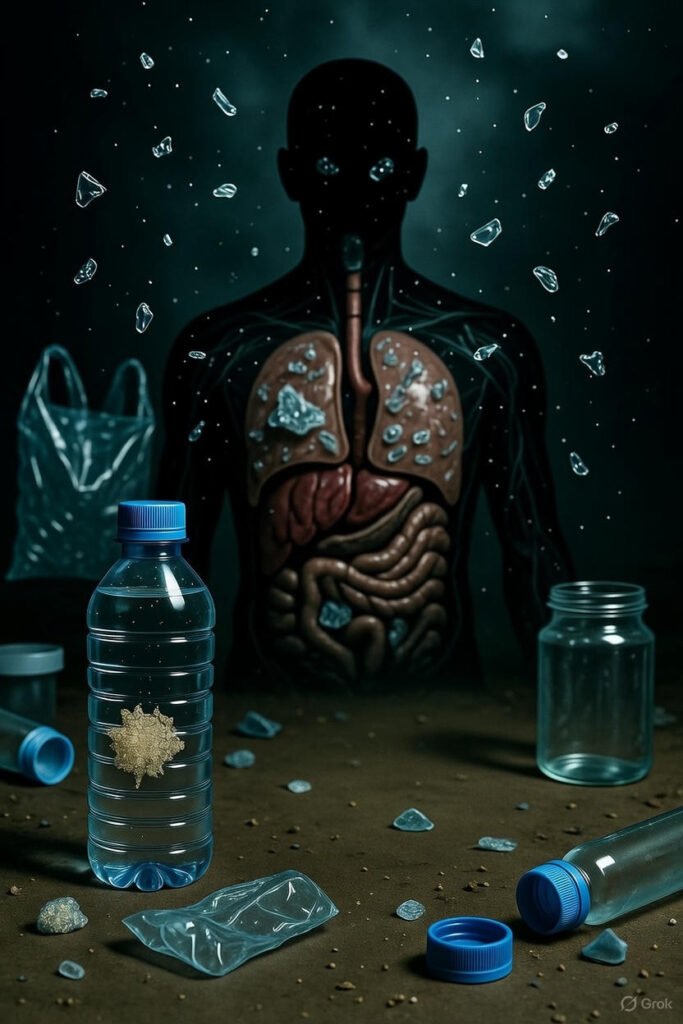
Humans consume microplastics primarily through ingestion, inhalation, and skin contact in routine activities and products. Common ingestion sources include seafood like fish, mussels, oysters, and shellfish (with estimates of 0.15 to 7,527 particles per fish, or about 53,864 particles annually from seafood equivalent to 17 credit cards), table salt (9 to 2,676 particles per kg), honey (32 to 108 fibers per kg), beer and soft drinks, milk, packaged meat, canned sardines, and fruits/vegetables. Beverages in plastic bottles or from take-out containers can release particles, with bottled water containing up to 35,436 particles per liter—far more than tap water. Kitchen practices contribute, such as using plastic cutting boards (releasing particles when slicing foods like chicken or fish), heating food in plastic containers, or brewing tea in plastic bags (releasing up to 11.6 billion particles per cup). Infant feeding bottles can expose babies to 16.2 million particles per liter, while chewing gum may shed hundreds to thousands of particles into saliva per piece. Personal care items like toothpaste, face wash, lipstick, hand sanitizer (with 83% of brands containing particles), and exfoliants introduce microplastics via ingestion or skin absorption. Inhalation occurs from indoor air and dust, often from synthetic textiles in clothing, carpets, and furnishings that shed microfibers during wear or washing (up to 1,900 fibers per garment). Overall, average annual intake is estimated at 39,000 to 121,000 particles per person, with some studies suggesting up to 12 plastic bags’ worth equivalent from diet alone.
My Microplastic Mitigation Strategy
Here are the things I have done in my life to eliminate what I think are the major sources of microplastics:
- Never microwave or heat anything plastic. Always microwave on a plate or bowl made from ceramic or glass. Probably the biggest rule of microplastic avoidance is not to heat anything made from plastic that you will consume. This would include getting food to go that is put hot right into plastic. The worst violators are soups. I get to go curry sometimes from a Thai restaurant. They put super hot liquid right into plastic. Not ideal.
- Drink filtered water as much as possible. There is a lot more to dive into on water filters from very basic to systems for your whole house. I am using a very rudimentary under sink system to get the basics out of my water as does my whole family. I can’t get support for something more substantial that would need real counter top space just yet. I’ll keep working on it.
- Never drink from plastic bottles (any liquid from water to energy drinks to protein drinks). This includes not only liquid purchased in plastic from the store but also water put into reusable plastic water bottles such as your beloved Nalgene or shaker bottle for mixing powders. Always drink out of steel or aluminum water bottles only such as a Yeti. I have five different sizes/styles of Yetis for different scenarios. Buy drinks in cans or glass. I also stopped drinking from the water cooler at my office. I bring in filtered water from home in a large Yeti water bottle. I use this Ice Shaker bottle for any mixing I need to do.
- Never drink from plastic cups. If you have the option, use steel or glass cups for anything, hot or cold liquids.
- Never use plastic straws. It just doesn’t make sense to use a steel water bottle or a glass cup and then drink all the liquid through plastic straws. Either drink it without a straw or use a steel one. I replaced the internal ones in my daughter’s steel water bottle. Lots of options such as these.
- Never drink from single use coffee cups. They are lined with plastic to keep the cup rigid after putting a hot liquid in it. They also have plastic lids, which are bad because you don’t want hot liquid passing through the plastic lid on the way to your mouth. When I travel or get coffee/tea out of my home, I bring a Yeti tumbler and ask them to fill that.
- Never make coffee with plastic coffee makers. Always use a metal or glass pour over such as this Kalita Wave 185 (mine is more than 10 years old!). Normal coffee machines are putting hot water over plastic. Plastic Keurig pods are also a huge no go. Got rid of my beloved Aeropress coffee maker too because it’s all plastic.
- Never use tea bags that contain plastic. Most common ones do, so you have to check. I use Bigelow tea only. Very common brand/easy to find. Read more here.
- Never chew common gum, which most likely uses a gum base that contains plastic. Yes, basically every common gum. Instead chew a natural non-plastic based gum such as Refresh gum instead. I tried a lot of the similar products and Refresh was the only one I stuck with. This hurt a lot because I chewed a lot of gum.
- Never used pods for washing dishes or clothes. They are contained in plastic, which can coat your clean dishes or clothes. Use old school dishwasher powder and liquid or powdered detergent instead. It’s also cheaper.
- Never use plastic forks, spoons or knives. Choose metal ones. Keep one handy and wash it. It’s not hard to not be so lazy and wasteful to use a plastic fork every single day for lunch.
- Choose glass or metal containers for food storage and transport. We still use Rubbermaid storage containers for lot of food in my house, which I am OK with because they are indestructible, easy to clean, and inexpensive. Glass would be significantly harder and quite frankly not necessary to store cut up peppers or a leftover steak honestly. I do choose to transport food I will eat out of in glass. There are good steel options too.
- Never use plastic-based dish brushes or sponges. Always use natural materials when cleaning things you will eat from such as these bamboo and wood ones.
- Avoid touching receipts from stores. Hold the edges/only get a printed one when absolutely necessary. Traditional receipts are coated with a plastic polymer that includes toxic chemicals like bisphenols, which are linked to health risks.
- Avoid buying food that comes packaged in plastic. This is almost impossible to eliminate. Look at all the food you are eating, even the real unprocessed food, and see how much plastic is involved. Almost everything comes in plastic. Avoid it if possible. Choosing to bring reusable bags like these to get apples or cucumbers vs using plastic bags is one way. This one is a complete uphill battle.
- Avoid cooking pans with toxic coating. I have been using this frying pan set for a while with good results after researching pans without harmful coating. A lot more expensive options out there. The key is pans that don’t chip pieces off into your food.
- Never use plastic cutting boards. Use a wood or silicone-based one instead. I got two really nice ones on Etsy that I rotate. We do have one non-wood one that is made out of natural materials similar to this one but is similar to plastic that we use for raw meat because it’s easier to clean.
- Never use plastic kitchen utensils because pieces break off into your food. Use wood or silicone-based ones instead.
- Don’t eat soup. Yes, soup cans are typically lined with a plastic coating to prevent the metal from corroding and to stop the food from coming into direct contact with the metal, which could alter the taste or cause contamination. Now imagine they put a hot liquid into it right before it’s sealed up too and you can feel the microplastics coming at you through your screen right now. Make fresh soup with real, whole food ingredients instead. That’s good nutritional advice too.
Here are things I don’t do that I acknowledge could be done:
- Use only natural clothing fibers that don’t contain any plastic. All my comfortable clothing that has stretch to it, which is basically everything I have, has plastic in it. I am not ready yet because it’s both too hard and not a big enough rock for me to do. There is an argument to make for an incremental step, which would be to just use natural materials for exercise clothing because it gets hot and rubs together increasing the likelihood of plastic release into the air you are breathing (as you are breathing heavier too). This is very compelling to me. Still, I am pretty happy with my training clothes. This is a $1000 cost to get rid of then rebuy the amount I’d need to have a good rotation probably. Maybe replacing each worn item with a natural fiber alternative gets you there eventually. An example of a company making these is Ryker.
- Use natural material toothbrushes. I did try these Sonicare electric toothbrush heads. They aren’t bad. I ended up preferring the cleaning effects of the traditional plastic bristles. My reason is the plastic is better at staying clean vs the bamboo, but also because I am spitting out the plastic I am getting in my mouth.
- Pay attention to eating certain fish. I don’t eat enough fish to care about this myself, but I see how they consume and accumulate microplastics.
- Filter air throughout your home. I believe there are microplastics in the air. Too expensive, too hard, and maybe I don’t believe the threat is real enough to put thousands of dollars of air filters in my home. A lot of people put just one good one in their bedroom, which I can get on board with maybe. I have a decent air filter in my basement already. May get one for the upstairs now that I make it more apparent to myself how I am not addressing this.
For More Information
Start with Dr. Rhonda Patrick’s Podcast Discussions on Microplastics. Rhonda Patrick, PhD, frequently covers health and science topics like microplastics on her own podcast, FoundMyFitness, as well as through guest appearances on other shows. Based on recent episodes and appearances, here are the key podcasts where she discusses microplastics in depth, including their health impacts (e.g., on the brain, reproductive systems, and overall body), sources of exposure, and practical ways to reduce it. I’ve focused on episodes with significant coverage of the topic.
1. FoundMyFitness Episode #095: What Microplastics Are Doing to Your Brain, Body, and Reproductive Systems (September 19, 2024)
- This is a solo episode on her own podcast where she dives deep into the science of microplastics, including how they enter the body, accumulate in organs, and contribute to issues like inflammation, hormonal disruption, and potential links to diseases. She also shares evidence-based strategies for minimizing exposure, such as avoiding plastic-lined products and using filters.
- Listen on: Apple Podcasts, Spotify, or YouTube.
- Related: She has shorter aliquots (excerpts) like Aliquot #122: How to Limit Microplastic Exposure, which pulls from this episode and others for quick tips.
2. Modern Wisdom Episode #907: Dr Rhonda Patrick – How Microplastics Are Ruining Your Health (February 23, 2025)
- As a guest on Chris Williamson’s podcast, Rhonda explores how microplastics build up in the body, their links to chronic health issues (like cardiovascular risks and endocrine disruption), and actionable steps to limit exposure. The discussion emphasizes environmental toxins and long-term health effects.
- Listen on: Apple Podcasts, Spotify, or YouTube.
3. The Rich Roll Podcast Episode #885: Dr. Rhonda Patrick On Why Exercise Fuels The Brain, How Microplastics Poison The Body, & The Science Of Fitness (January 20, 2025)
- Rhonda returns as a guest (her third appearance) on Rich Roll’s show. The second half of the episode focuses on microplastics, covering facts vs. hype, their infiltration into the body (e.g., via food and air), health risks like reproductive toxicity, and practical avoidance strategies. The first half is on exercise, but microplastics get substantial airtime.
- Listen on: Apple Podcasts, Spotify, or YouTube (note: the YouTube link may vary; check the official channel).
Additional Notes
- Rhonda often shares clips and updates on microplastics via her X (Twitter) account (@foundmyfitness) and website (foundmyfitness.com), including videos like “The ULTIMATE Guide to Limiting Microplastic Exposure” (January 2025). These are shorter formats but stem from her podcast content.
- She hasn’t appeared on many other podcasts specifically for microplastics recently, but she references the topic in broader health discussions. For example, Andrew Huberman’s Huberman Lab episode on microplastics mentions her work, but she’s not a guest there.
- If you’re looking for more, her full episode archive is on foundmyfitness.com/episodes, and she occasionally touches on related environmental toxins in older episodes.
References. This article was generated with help of AI (mostly Grok) for research. In addition to information I had consumed via podcasts, articles, and videos, here are the sources used. Click to expand.
- What Are the Health Risks of Microplastics in Our Bodies? – https://www.everydayhealth.com/healthy-living/what-are-the-health-risks-of-microplastics-in-our-bodies/
- Microplastics Everywhere | Harvard Medicine Magazine – https://magazine.hms.harvard.edu/articles/microplastics-everywhere
- Microplastics and our health: What the science says – https://med.stanford.edu/news/insights/2025/01/microplastics-in-body-polluted-tiny-plastic-fragments.html
- Health Effects of Microplastic Exposures: Current Issues and Perspectives – https://pmc.ncbi.nlm.nih.gov/articles/PMC10151227/
- Potential Health Impact of Microplastics: A Review of Environmental Distribution, Human Exposure, and Toxic Effects – https://pubs.acs.org/doi/10.1021/envhealth.3c00052
- I’m a Microplastics Researcher. Here’s How To Limit Their Dangers – https://www.ucsf.edu/news/2024/02/427161/how-to-limit-microplastics-dangers
- Microplastics: Sources, health risks, and how to protect yourself – https://iee.psu.edu/news/blog/microplastics-sources-health-risks-and-how-protect-yourself
- How do the microplastics in our bodies affect our health? – BBC – https://www.bbc.com/future/article/20250723-how-do-the-microplastics-in-our-bodies-affect-our-health
- New study links microplastics to serious health harms in humans – https://www.ewg.org/news-insights/news/2024/03/new-study-links-microplastics-serious-health-harms-humans
- Plastics and Human Health | Plastics and the Environment Series – https://www.genevaenvironmentnetwork.org/resources/updates/plastics-and-health/
- Microplastics everywhere: Are we facing a new health crisis? – https://www.weforum.org/stories/2025/02/how-microplastics-get-into-the-food-chain/
- Microplastics and Nanoplastics in Foods – FDA – https://www.fda.gov/food/environmental-contaminants-food/microplastics-and-nanoplastics-foods
- What doctors wish patients knew about microplastics – https://www.ama-assn.org/public-health/prevention-wellness/what-doctors-wish-patients-knew-about-microplastics
- Microplastics Are in Our Food, Water and Air. Should We Be Worried? – https://news.virginia.edu/content/microplastics-are-our-food-water-and-air-should-we-be-worried
- Your kitchen is full of microplastics. Here’s how to eat less of them – https://www.bbc.com/future/article/20250919-how-to-eat-less-plastic
- Twenty years of microplastic pollution research—what have we learned? – https://www.science.org/doi/10.1126/science.adl2746
- Forty-year pollution history of microplastics in the largest marginal sea of the western Pacific – https://www.geochemicalperspectivesletters.org/article2012/
- The Story of Plastic Pollution: From the Distant Ocean Gyres to the Global Policy Stage – https://tos.org/oceanography/article/the-story-of-plastic-pollution-from-the-distant-ocean-gyres-to-the-global-policy-stage
- A brief history of microplastics effect testing: Guidance and prospect – https://www.sciencedirect.com/science/article/pii/S0269749125000843
- Sounding the alarm on microplastic pollution | Penn State University – https://www.psu.edu/news/research/story/sounding-alarm-microplastic-pollution
- Introduction – Microplastics – ITRC – https://mp-1.itrcweb.org/introduction/
- Everything you should know about microplastics – UNEP – https://www.unep.org/news-and-stories/story/everything-you-should-know-about-microplastics
- Yale Experts Explain Microplastics – https://sustainability.yale.edu/explainers/yale-experts-explain-microplastics
- Microplastics in lake sediments help reveal history of plastic pollution – https://www.ehn.org/microplastics-lake-sediments
Post thoughts/questions to comments.